

Farming Healthy Crops
Working in partnership with the Rancho California Water District and Brokaw Nursery in Ventura, we are embarking on a project which will upgrade the rootstock on 55 acres of avocado groves. Currently these groves are occupied by trees which are upwards of 40 years old. They are beyond their prime fruit-producing years and they do not have the optimal roots to grow in the sandy soil of a Southern California desert climate.
We upgrading to the Dusa (Merensky 2) rootstock. Now tried and true for over 20 years, this rootstock is much more salt-tolerant and rot-resistant than older rootstocks, and is now the most widely planted rootstock for avocado trees in California. Uprooting the trees that are currently in the groves and replacing them with Dusa root, Hass avocado saplings will increase production and reduce water usage.
Water Conservation
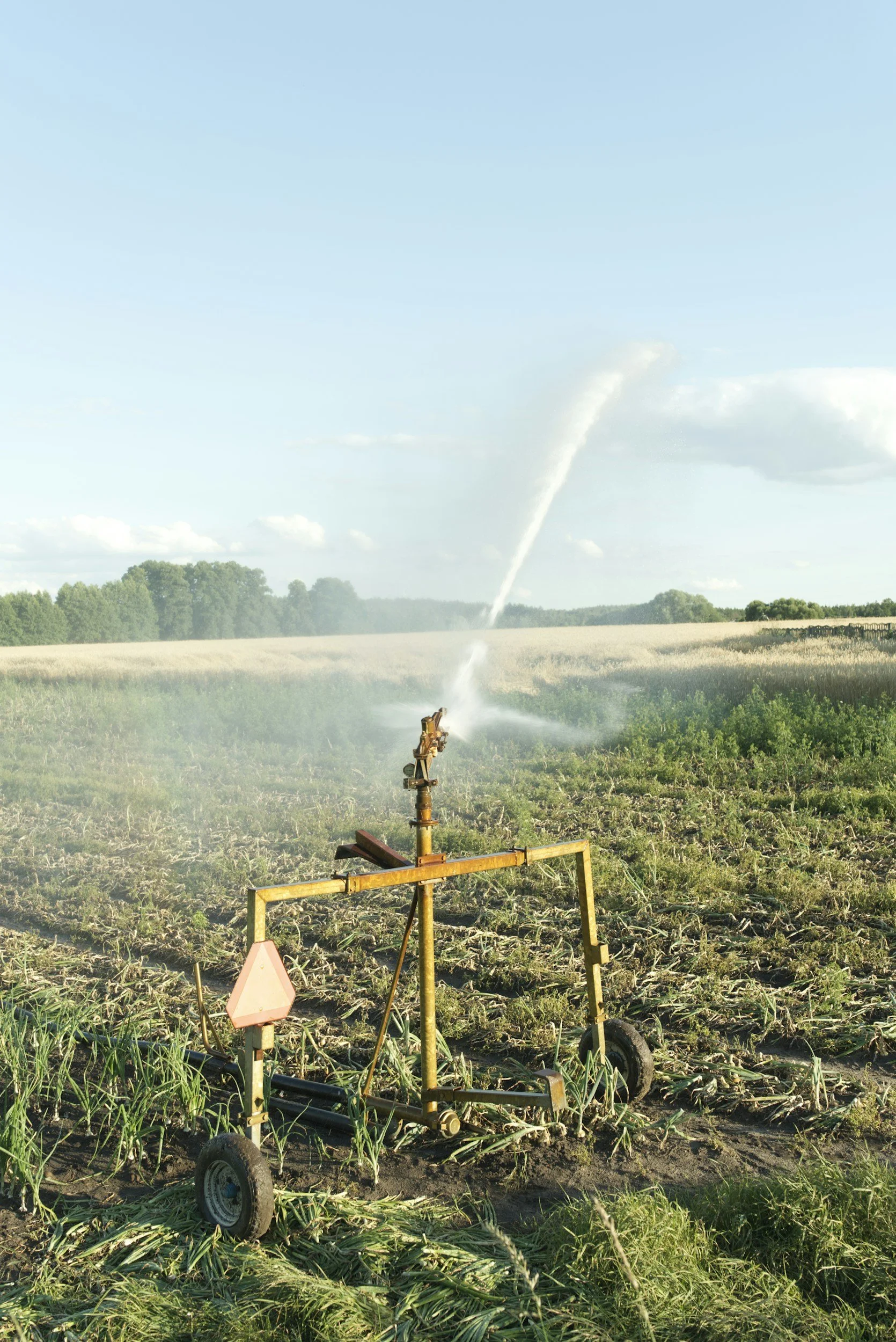
In addition to upgrading avocado rootstocks, we are doing a complete overhaul on the grove's irrigation system to cut down on water usage. This system will have lines that flow both up and downhill on the varying terrain of the grove in order to make use of the strong water pressure than comes from the main line. The new grove will start on a drip line system and will be easily upgradeable to sprinkler once the trees have matured and require more water. Above ground sprinklers are already in use in mature groves.
The new grove will also employ state of the art ag software from the likes of Tule and AgSquared. These give real-time data on water usage, which will give answers to crucial how, what and when questions on fertilizers, pruning, pollination and production yields.

Reverse Osmosis
Water is arguably the most important puzzle piece in agriculture. When that piece is not up to par, everything else will not come together in harmony. The Lodge is dedicated to using specialized agricultural reverse osmosis systems where it is beneficial.
Reverse osmosis systems are commonplace in homes. They desalinate tap drinking water and improve its overall quality and taste. Although not as common in agricultural production, RO systems make a huge difference in removing salts and other minerals present in excess in well-sourced water. This is another way to reduce water usage on crops such as avocados, which require an incredible amount of water to thrive.

Soil Health
The makeup of the soil is another key puzzle piece in ag production. We closely monitor soil composition, as what is present in the soil will ultimately make its way into the crops. Maintaining the health of the water source is one way to also maintain soil health, but it may not be enough. Regular soil and plant tissue testing tell us a lot about minerals that are in and out of balance.
These tests give us valuable data which influences our decisions on what kinds of fertilizers to add to our soils. Salt, pH, potassium, boron, iron, zinc as well as many other minerals are vital to soil and plant health. In order to fertilize different sections of soil and different crops accordingly, liquid fertilizers are injected into different irrigation manifolds. Some fertilizers are even spread by hand. Monitoring soil health closely allows for all necessary minerals and nutrients to be present in harmonious balance.
